Myanmar's 2025 Sham Elections: Junta's Latest Charade to Legitimize Military Rule

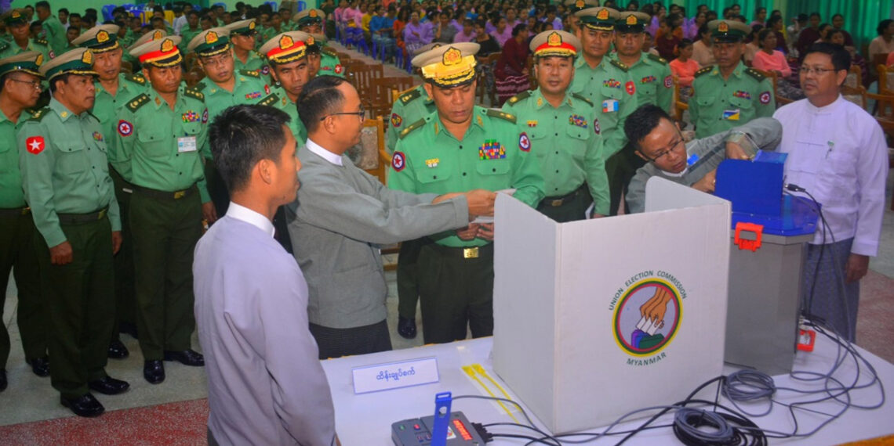
Nearly five years after seizing power in a bloody coup that shattered Myanmar's democratic aspirations, the country's military junta is orchestrating what international observers, human rights organizations, and the United Nations have unanimously condemned as a sham election. Beginning December 28, 2025, Myanmar's generals are staging a multi-phase electoral process designed not to restore democracy, but to manufacture a veneer of legitimacy for continued authoritarian rule, a cynical pattern deeply embedded in Myanmar's history of military dictatorship.
An Election That Excludes Most of the Nation
The fundamental illegitimacy of the December 2025 elections becomes immediately apparent when examining their geographic scope. The junta-controlled Union Election Commission has announced that voting will occur in only 202 of Myanmar's 330 townships across three phases, with 56 townships explicitly excluded from participation. This partial coverage reflects a stark military reality: the junta controls merely 21 percent of Myanmar's territory, while armed resistance forces hold 42 percent, with the remainder contested.
The military's 2024 census, supposedly conducted to prepare voter lists, could only be completed in 145 townships, less than half the country. This massive territorial deficit means that millions of Myanmar citizens will be systematically disenfranchised, unable to participate even if they wished to do so. An estimated 3.6 million internally displaced persons face particular obstacles to voting, having fled their homes due to military violence.

The elections will take place only in areas where the military has managed to maintain or recently recapture control through brutal force. The junta has explicitly linked its ongoing military offensives to the election schedule, intensifying airstrikes in contested areas to "regain key contested areas where elections have been announced to take place," according to United Nations assessments. This calculated violence transforms the election from a democratic exercise into a military conquest operation with ballots as props.
Forced Participation: The Military's Campaign of Coercion
While millions are prevented from voting, those in junta-controlled areas face intense pressure to participate, not as an exercise of democratic rights, but under threat and coercion. The United Nations High Commissioner for Human Rights, Volker Türk, has warned that "civilians are being coerced from all sides, forced by the military to vote and threatened by armed opposition groups to boycott, in a climate of fear, violence and mass repression".

The coercive tactics deployed by the junta are extensive and systematic. Internally displaced persons in areas including Mandalay region have reported being warned that their homes would be seized or that airstrikes would continue if they did not return to vote. University students have been compelled to cast early ballots to continue their courses, while government staff face similar pressures. In the most egregious cases, prisoners in facilities like those in Loikaw are being forced to vote.
The military's pressure extends beyond Myanmar's borders. At 50 overseas polling stations established at embassies and consulates, Myanmar nationals have been told they must vote to access basic consular services. In South Korea, where over 80,000 Myanmar nationals work, the embassy extended its voting period from two days to seven after almost no one appeared to cast ballots during the initial weekend. Protesters outside embassies across Asia, Europe, and North America have documented the regime's desperate attempts to manufacture turnout.
Inside Myanmar, the junta has dispatched troops and administrators door-to-door in Yangon to force residents to verify their voter eligibility after voluntary compliance proved negligible. Reports from multiple townships describe cash being thrown into crowds at Union Solidarity and Development Party rallies—a transparent indication of how hollow the military's popular support has become.
The Election Protection Law: Democracy Criminalized
To suppress dissent and eliminate opposition to its electoral farce, the junta enacted the "Law on the Protection of Multiparty Democratic Elections from Obstruction, Disruption, and Destruction" on July 29, 2025. This draconian legislation criminalizes virtually any criticism of the election, any encouragement of boycotts, and any actions deemed to "undermine stability" related to the polls.

The penalties prescribed by this law are staggering in their severity: a minimum of three years imprisonment extending to life imprisonment or even the death penalty in certain cases. If any action deemed to obstruct the election results in someone's death, capital punishment becomes the prescribed sentence.
The enforcement of this law has been swift and brutal. As of mid-December 2025, at least 229 people have been charged under the legislation, with 122 confirmed arrests. The breadth of prosecutions demonstrates that virtually any expression of opposition has been criminalized. Film director Mike Tee, actor Kyaw Win Htut, and comedian Ohn Daing were each sentenced to seven years in prison simply for criticizing a pro-election propaganda film. Young people have received sentences of decades of hard labor for putting up boycott stickers. In Shan State, a man was sentenced to seven years for criticizing the election. Another individual was arrested near Yangon for a Facebook message condemning the vote.
The absurdity of the repression extends to acts as trivial as laughing when the wind blew down a junta party poster, an incident that resulted in imprisonment. In Kyaikto, three young people were abducted by troops after reading anti-election posters on a wall. When activists staged an anti-election demonstration in Mandalay on December 3, led by resistance leader Dr. Tayzar San, the junta retaliated by destroying dozens of shops in Zaycho market and offering a 20 million kyat ($10,000 USD) reward for the activists' capture.
A Rigged Electoral System: Opposition Eliminated
The structural manipulation of the electoral process ensures the military's preferred outcome regardless of how votes are cast. While 57 political parties appear on the ballot, one is overwhelmingly favored by the legal framework and junta institutions: the Union Solidarity and Development Party (USDP), the military's proxy party presenting over 1,000 candidates.

The National League for Democracy (NLD), which won landslide victories in both the 2015 and 2020 elections, has been dissolved by the military-appointed Union Election Commission. In total, 40 political parties, including those that won 88 percent of parliamentary seats in 2020, have been disbanded for refusing to re-register under the junta's illegitimate authority.
The 2023 Political Parties Registration Law imposed onerous requirements specifically designed to exclude genuine opposition. Anyone with a criminal conviction is barred from party membership, a provision targeting the more than 30,000 political prisoners the junta has arrested on politically motivated charges since the 2021 coup. Among those imprisoned are Aung San Suu Kyi, sentenced to 27 years and held in an undisclosed location at age 80, and President Win Myint.

The electoral system itself has been redesigned to favor military control. The 2008 constitution already reserves 25 percent of all parliamentary seats for military appointees. The junta has additionally switched to a proportional representation system that allows it to govern with just over one-third of the popular vote. The use of dubious voter lists, opaque advance voting procedures, and untested electronic voting machines further undermines any semblance of electoral integrity.
Violence as Electoral Strategy
The military's preparations for the election have been marked by a dramatic escalation in violence. In 2024, Myanmar experienced more airstrikes than in 2021, 2022, and 2023 combined. During the first five months of 2025, the junta conducted 1,134 airstrikes compared to 640 during the same period in 2024 and 197 in 2023. These attacks, which may constitute war crimes according to Amnesty International, are explicitly intended to recapture territory where elections have been announced.
Since the 2021 coup, at least 7,000 civilians have been killed by the military, though the true figure is likely far higher. As of March 2024, total deaths exceeded 50,000, including 8,000 civilians, 570 of whom were children. More than 26,000 individuals have been arrested. The conflict has displaced over 2 million people and left 17.6 million, nearly one-third of the population, requiring humanitarian assistance.
This violence is not incidental to the electoral process but integral to it. The junta is using military force to create the conditions for voting in areas it wishes to include, while systematically excluding regions it cannot control. As Amnesty International's Myanmar Researcher Joe Freeman stated: "Many in Myanmar are opposed to this election because they fear it will leave the same people who have been unlawfully killing Myanmar civilians for five years in a position of entrenched power, outside the bounds of accountability and justice".
Historical Precedent: Myanmar's Pattern of Sham Elections
The 2025 elections represent not an aberration but a continuation of a well-established pattern in which Myanmar's military juntas have repeatedly used fraudulent electoral processes to legitimize authoritarian rule while maintaining the illusion of democratic transition.
The 2008 Constitutional Referendum
On May 10, 2008, the military junta then known as the State Peace and Development Council (SPDC) held a constitutional referendum just days after Cyclone Nargis had devastated the country. The regime proceeded with the vote despite the humanitarian catastrophe, demonstrating its prioritization of political control over citizen welfare—precisely as it is doing in 2025 amid ongoing conflict and displacement.

The military claimed that 92.4 percent of voters approved the new constitution, which guaranteed the armed forces 25 percent of parliamentary seats and barred anyone married to a foreign national from the presidency—a provision specifically designed to disqualify Aung San Suu Kyi. The referendum was characterized by systematic coercion remarkably similar to current tactics. Soldiers went door-to-door telling villagers: "Vote for the yes now in a few minutes, instead of losing time and money on May 10; on that day the lines will be long and your daily salary will not be reimbursed". Food rations for an entire year were promised to villages that supported the charter.
The National League for Democracy's campaign against the constitution was violently suppressed, with activists arrested and materials confiscated. Local journalists reported widespread voter intimidation at polling sites, with authorities marking ballots themselves and preventing voters from exercising free choice. As with the 2025 elections, the military disregarded widespread international condemnation to advance its predetermined political agenda.
The 2010 General Election
On November 7, 2010, Myanmar held its first multi-party elections in 20 years. The military-backed USDP won between 76 and 80 percent of elected seats in an election boycotted by the NLD. The junta engaged in systematic vote-buying and ballot box stuffing so blatant that it "shocked and angered ordinary people, and deprived the election of any legitimacy it might have had," according to contemporary analysis. Despite 2,200 political prisoners remaining in custody, the military proceeded with the vote.

The United Nations expressed serious concerns about the fairness of the elections, while Western countries dismissed them as fraudulent. Yet the exercise served its purpose: the military transitioned to a nominally civilian government that maintained substantial military control, ushering in a decade of limited reforms while preserving ultimate authority in the hands of the armed forces.
The Pattern of Rebranding
Throughout this history, Myanmar's military has repeatedly changed names and organizational structures while maintaining substantive control—a pattern of rebranding designed to create the illusion of change without actual democratization. In 1988, after crushing pro-democracy protests that killed thousands, the military formed the State Law and Order Restoration Council (SLORC). In 1997, apparently on advice from a US-based public relations firm, SLORC changed its name to the State Peace and Development Council (SPDC). The organizational structure was revamped, but military dominance continued unchanged.
In 2011, the SPDC was officially dissolved and replaced by a "quasi-civilian" government that nonetheless preserved military control through constitutional provisions. After the 2021 coup, the military formed the State Administration Council (SAC). Most recently, in August 2025, the SAC rebranded itself as the State Security and Peace Commission (SSPC), calling itself an "interim government" to oversee elections. Junta leader Min Aung Hlaing added the title of "chairman" of this new body to his existing roles as acting president and commander-in-chief.
This continual rebranding serves a dual purpose: it allows the military to claim it is implementing political transitions and reforms, while the fundamental structures of authoritarian control remain firmly in place. The 2025 elections fit precisely within this historical pattern—a theatrical performance of democracy masking continued military dictatorship.
Expert Assessments: What These Elections Will Bring
International experts and Myanmar specialists are unified in their assessment that the December 2025 elections will not resolve Myanmar's political crisis but will instead deepen the country's instability and suffering.
The International Crisis Group concludes that "the planned elections, which will not be credible, will not resolve Myanmar's political crisis or reduce the intensity of the armed conflict. Instead, they are likely to harden political divisions, and they could well trigger new waves of violence". Analysts emphasize that the elections are "a tactical exercise, involving the reshuffling of new executive roles, offering a veneer of stability and enough enticement to external partners to maintain legitimacy".
The fundamental purpose of the elections is not democratic governance but rather to "provide countries like India diplomatic cover to reengage the junta—fracturing international pressure at a moment when Myanmar is working actively with China against U.S. interests," according to the Foundation for Defense of Democracies. Human Rights Myanmar notes that "one of the election's purposes is to provide a pretext for international re-engagement, allowing the military to continue its atrocity crimes".
The most likely scenario, according to multiple expert assessments, is "prolonged contestation and uneasy status quo". The military will maintain control of major cities and natural resources while resistance forces continue to dominate rural and ethnic areas. Min Aung Hlaing is expected to transition from military chief to president, consolidating his personal power while the armed conflict continues.
The humanitarian and regional consequences will be severe. Myanmar's state failure is already generating refugee flows, border instability, the resurgence of communicable diseases including HIV, tuberculosis and malaria, and a boom in transnational organized crime. More than 120,000 people have been trafficked and enslaved in scam centers that have become integral to Myanmar's conflict economy. The surge in narcotics production and illegal weapons flowing from lawless areas threatens the entire Southeast Asian region.
Economically, Myanmar faces continued collapse. Staple food prices have risen 426 percent since the coup, while nearly 20 million people—almost 40 percent of the population—require humanitarian assistance. A war-driven economy centered on resource extraction offers no path to sustainable development.
Crucially, the elections will not diminish resistance. The National Unity Government, the exiled administration claiming to represent Myanmar's legitimate government, enjoys a 93 percent favorable opinion among Myanmar's population according to 2024 surveys. Resistance groups have vowed to continue their opposition regardless of the election outcome, viewing the military's departure from politics as the only acceptable resolution.
Conclusion: Democracy Cannot Be Performed at Gunpoint
Myanmar's December 2025 elections represent the military junta's latest attempt to manufacture legitimacy for authoritarian rule through the hollow performance of democratic procedures. By excluding most of the country's territory, coercing participation through threats and violence, eliminating genuine opposition, and criminalizing all dissent, the generals have engineered an election that meets none of the international standards for free and fair democratic contests.
This charade follows a well-established historical pattern in which Myanmar's military has repeatedly used sham elections and cosmetic transitions to legitimize dictatorship while creating the illusion of democratic progress. From the 2008 referendum held amid disaster to the fraudulent 2010 election to the continual rebranding of military governing bodies, the playbook remains unchanged: maintain authoritarian control while performing democratic theater for international consumption.
The international community must recognize these elections for what they are—not a step toward democracy but an obstacle to it. As UN Secretary-General António Guterres stated bluntly: "I don't think anybody believes those elections will be free and fair". Recognition or normalization of relations based on these fraudulent polls would only entrench the military's grip on power and prolong the suffering of Myanmar's people.
The path to genuine democracy in Myanmar requires not the acceptance of theatrical elections conducted at gunpoint, but continued international pressure on the junta, support for the democratic opposition, and accountability for the military's atrocity crimes. Until the armed forces relinquish their stranglehold on political power and allow the will of the Myanmar people to be freely expressed, no election—regardless of how elaborate the staging—can be considered legitimate.


Comments