Breaking the Cycle: A Novel Set in Myanmar's Chin State

Updated: Dec 12, 2025
Where Ancient Mountains Meet Modern Resistance
Breaking the Cycle invites readers into one of Southeast Asia's most compelling yet lesser-known regions: Chin State, a mountainous sanctuary in northwestern Myanmar that has become the crucible of resistance against military dictatorship. My novel is rooted in the dramatic events of Myanmar's 2021 coup and the civil war that followed, with much of the story unfolding in and around Mindat, a town that has earned its place as a symbol of defiance in the struggle for democracy.
For those unfamiliar with this remote corner of the world, Chin State may seem distant and abstract. But through the journey of the novel's protagonist, Khin Yadanar, readers will discover a region of breathtaking beauty, profound cultural richness, and extraordinary human courage.

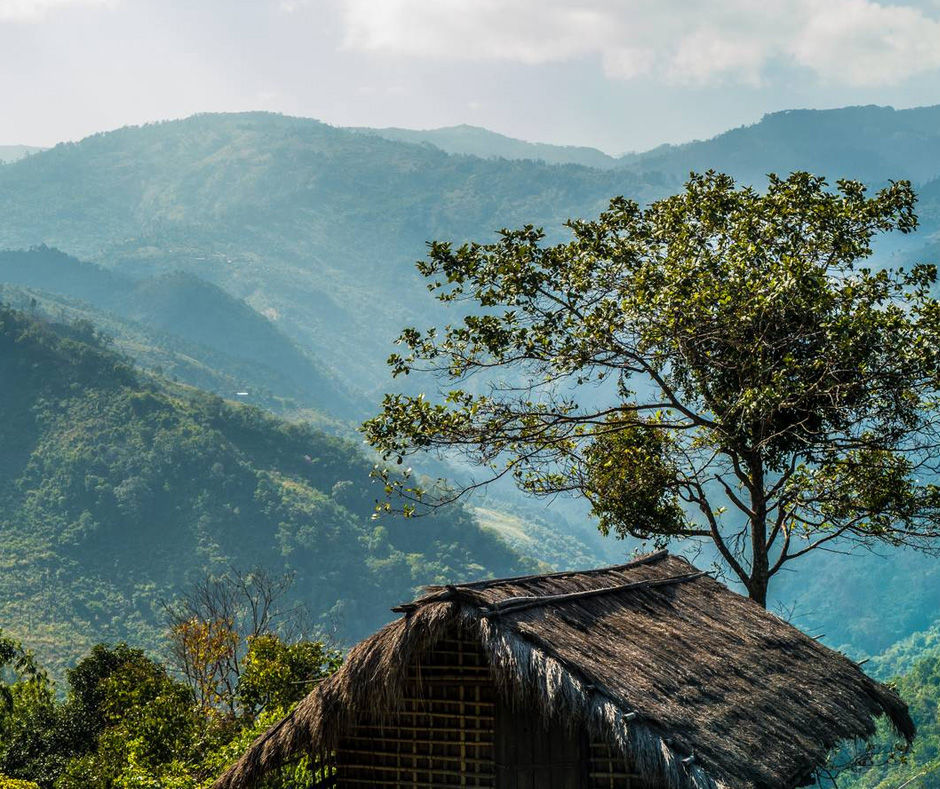
Photo - Kyaw Htut Aung-World Bank
A Land Apart: The Geography and Character of Chin State
Chin State occupies the northwestern borderlands of Myanmar, forming a natural frontier with India's Mizoram and Manipur states. The region is defined by the Chin Hills, part of the larger Arakan Mountain Range, a dramatic landscape of steep, undulating peaks, deep valleys, and winding trails that rise to over 3,000 meters at Mount Victoria (Nat Ma Taung).
This terrain has historically protected the Chin people from foreign domination and helped preserve their distinct cultures and traditions. Unlike the lowland plains of central Myanmar, the highlands offer a cooler climate, some of the coolest in the entire country, and lush tropical and subtropical forests that create a verdant world seemingly removed from the chaos below.
The very geography that isolated the Chin people for centuries would later become their fortress of resistance. The mountains make aerial bombardment treacherous, supply lines impossible, and conventional warfare nearly unwinnable for a technologically superior but logistically vulnerable military force.
A People of Profound Diversity
Chin State is home to one of the most ethnically diverse populations in Myanmar. With more than 50 distinct tribal groups speaking 45 different dialects, the region is a living testament to cultural plurality. The major tribes include the Lai, Mizo-related groups, Mara, Zomi, and many others, each with their own languages, traditions, and identities, yet bound together by shared values of community, respect for elders, and spiritual depth.
One of the most distinctive and haunting traditions of Chin culture is the facial tattoos worn by women, a practice that has fascinated and moved observers for generations. These markings, created through a painful ritual performed by skilled female artisans using natural ink and bamboo thorns, were traditionally a rite of passage indicating beauty, bravery, and strength. Each tribal group has distinctive patterns: the M'uun tribe features semicircles representing the moon, with lines for sun rays and dots for stars; other tribes bear vertical lines, spider web patterns, or thousands of tiny dots covering their faces.
Though officially banned in 1962, this tradition persists among older generations, carrying with it stories of resilience and cultural pride.

Mindat: The First City of Resistance
Within this landscape lies Mindat, a modest town that has become a symbol of Myanmar's democratic struggle. Located in Mindat District at an elevation that brings cool mountain breezes and often shrouds the town in mist, Mindat was virtually unknown to the outside world until the 2021 military coup changed everything.
On February 1, 2021, the Myanmar military executed a coup d'état, deposing the elected government. What followed was a brutal crackdown on peaceful protesters. In Mindat, the turning point came in late April 2021, when military authorities arrested seven peaceful pro-democracy activists. When local residents protested their release, police opened fire. The response was swift and extraordinary: the townspeople, armed only with hunting rifles and their determination, began actively resisting the military.
The Battle of Mindat (April-May 2021) became the first major armed conflict of Myanmar's ongoing civil war. Despite being vastly outgunned, the Chinland Defense Force (CDF) and local fighters used their intimate knowledge of the terrain to ambush military convoys, force the army into airborne bombardments, and hold their ground. The military responded with indiscriminate artillery fire, targeted bombing campaigns, and a blockade that cut off food and water supplies. Entire neighborhoods were destroyed. Thousands of civilians fled to India.
Yet the people of Mindat did not surrender. Their resistance inspired the entire nation and proved that an armed challenge to Myanmar's military was possible.

Buildings on fire following SAC attacks on Thantlang, Chin State on 29 October 2021. AFP - Getty
The Unfolding Crisis: Chin State Since 2021
Since that first confrontation, Chin State has become one of the theaters of Myanmar's broader civil war, a conflict pitting various resistance forces and ethnic armed groups against the military junta. The Chinland Defense Force, formed officially on April 4, 2021, has evolved into a coordinated network of township-based militias, while larger organizations like the Chin National Front (CNF) and the Chin Brotherhood provide broader coordination and leadership.
However, the very diversity that defines Chin culture has created challenges. Ancient tribal rivalries, different visions for political autonomy, and disagreements over strategy have sometimes divided the resistance forces, leading to occasional clashes between factions that should be allies. Yet despite these internal tensions, the overall direction remains clear: the Chin people have rejected military rule and are actively fighting to create space for a different future.
The situation remains fluid and dangerous. The town of Mindat was liberated by resistance forces in December 2024, only to face threats of recapture. Landmines litter the countryside. Civilians remain internally displaced. The military continues to conduct airstrikes and maintain control of several strategic locations, including the state capital Hakha.
Yet even amid this ongoing crisis, something remarkable is happening: the resistance is building the infrastructure of a new Myanmar. The Chinland Council has drafted an interim constitution and governance structure that envisions a federal, multi-ethnic democratic state—one that would protect ethnic and cultural autonomy while uniting the country under a shared commitment to democracy and human rights.


Comments